July FX round-up: Oil price volatility, Singapore tightens and a Bessent yen surprise
The Japanese yen fell to a 40-year low, the Korean won outperformed, the Rmb was flat, the Indian rupee was resilient, while MAS unexpectedly tightened monetary policy.
The second half of the year started on a more positive note for the major Asian currencies with expectations that US interest rates have peaked reviving investor interest in higher yielding Asian assets.
At regional level, there were three dominant drivers of Asian currency performance over the course of July, the first of which was a more than 20% jump in oil prices with the resurgence in Middle East tensions. The prices have since cooled over the last week as US President Donald Trump seeks a peace deal with Iran.
A similar dip in the semiconductor index (SOX) as financial markets came to question the sustainability of spending on artificial intelligence (AI), coupled with divergence in policy reactions as central banks debate how oil and AI are shifting their respective growth-inflation mix, were other key factors, explained Sameer Goel, Deutsche Bank’s global head of research for emerging markets and Asia Pacific (Apac).
“The highlights of the month were new multi-decade lows in JPY, strong outperformance of the KRW and INR’s resilience to oil moves,” he said.
The Asian Development Bank estimated that regional currencies appreciated by around 0.3% on a GDP-weighted basis during July, suggesting a broad move towards stability rather than a sharp rally.
In other major news, the US Fed held interest rates at 3.5% to 3.75% as markets questioned new chair Kevin Warsh’s communication strategy. The Hong Kong Monetary Authority followed suit by holding rates at 4%.
Japanese yen volatilty
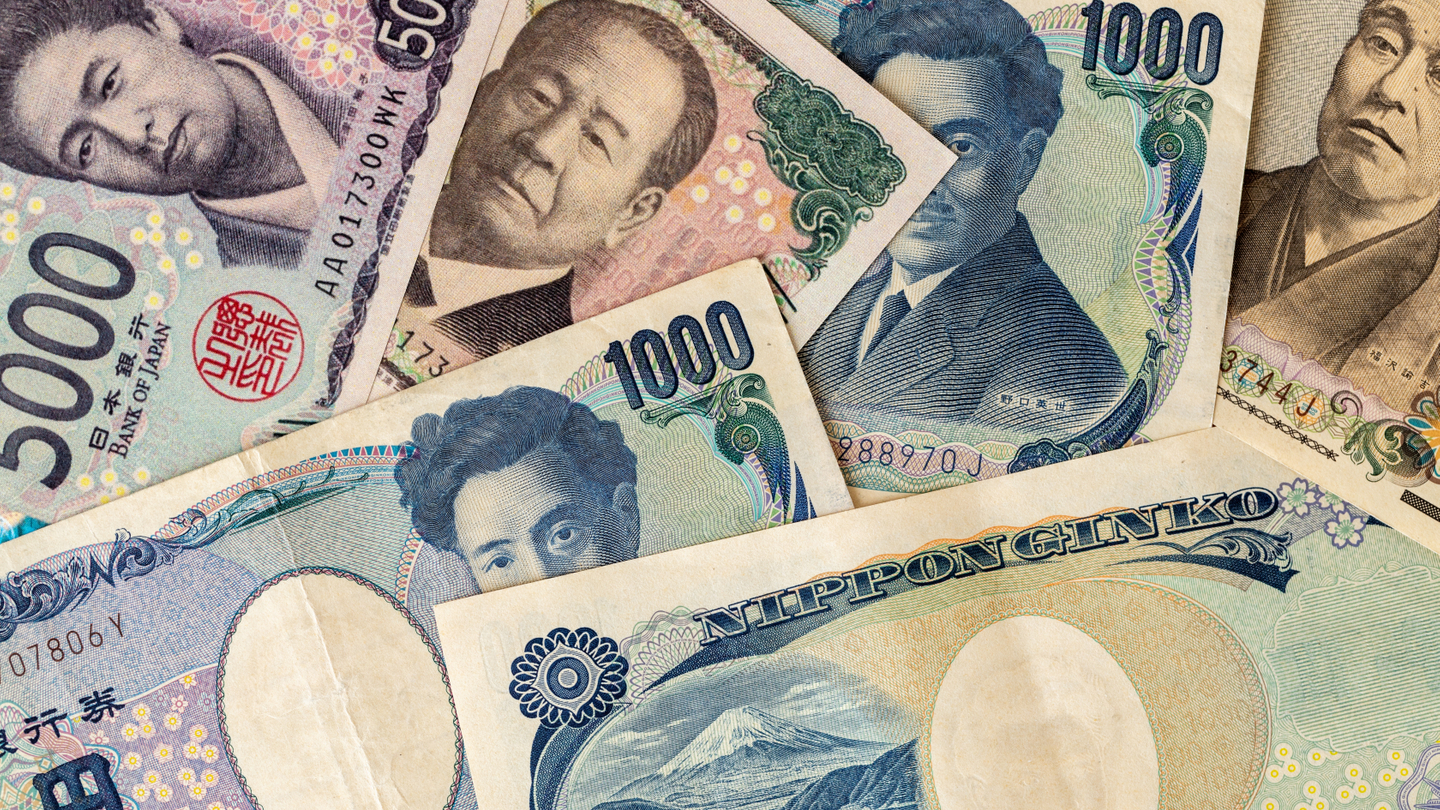
The yen weakened for the third consecutive month, with policy seen as being in more reactive mode and increasingly focused on yield rather than currency management.
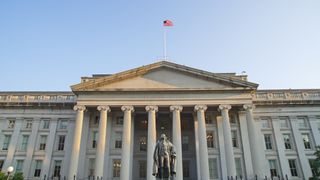
The month ended with a surprise move on July 31 when US Treasury Secretary Scott Bessent intervened by selling euros and buying a yet unspecified amount of yen – he was caught on camera by a Reuters photographer with a ‘To Do’ list to buy $5 billion to $10 billion of yen. The move could add pressure on the Bank of Japan (BOJ) to raise interest rates during its next meeting on September 17.
After being at a 40-year low at 163.9 on July 29, the yen had climbed to JPY 157.7 on July 31.
Masahiko Loo, senior fixed income strategist at State Street Investment Management, commented in a note: “Bessent couldn't be much clearer: the US is committed to supporting yen stability and expects policy follow-through from the BOJ. That's a rare instance of Washington openly backing the JPY while effectively nudging the BOJ toward neutral rates. September / October is now firmly in play for the next hike. The message seems to be: intervention can buy time, but durable yen strength requires higher Japanese rates.”
Loo added: “One silver lining is that if external pressure helps push the BOJ toward neutral (~1.75%), there may be less need for the Takaichi administration to lean on pensions to repatriate assets into Japanese government bonds (JGBs). With roughly ¥400 trillion ($2.55 trillion) of sidelined cash at Japanese banks, higher yields alone could attract substantial domestic demand back into JGBs, allowing the market to do the heavy lifting rather than policy-induced asset allocation shifts.”
In addition, the BOJ sought to take advantage of more negative sentiment towards the dollar by intervening in the foreign exchange market at the end of July, the second such intervention this year.
“The pace of weakness was tempered by talks around greater policy push for domestic investments by pension funds, but it is not yet clear whether this is aimed more at mobilising untapped domestic savings or mandating repatriation of domestic capital invested overseas,” said Goel.
The yen's movements will also impact corporate performance with Takeshi Okazaki, the CFO of Fast Retailing, clothing brand Uniqlo’s parent company, cautioning that the fall in the value of the yen was likely to negatively impact turnover and profitability in its domestic market over the next three months. The decline of the currency “could potentially have a significant impact on our performance,” he stated, while reporting robust financial performance for the three quarters ending in May.
Conversely, Lin Tao, executive officer and CFO of Sony Group Corporation, observed on its first quarter earnings call that the weaker yen had contributed to an increase in forecasted sales and operating income, with favourable exchange rates largely responsible for a 21% increase in Q1 sales.
Korean won
The won recorded a strong pullback from post-GFC lows hit in June, as a combination of policy tightening and tech equity correction helped the currency.
Goel observed that even as its current account has ballooned to record surpluses, the won continues to be driven more by global equity investor allocations and their currency hedging dynamics, with the outperformance of the Korea Composite Stock Price Index paradoxically driving FX weakness (more hedging) while underperformance leads to FX strength as a result of hedge unwinding.
“On currency effects, the stronger US dollar against the KRW had a positive quarter-over-quarter impact of around KRW3.1 trillion ($2.18 billion) on operating profit, mainly in our component businesses,” said Soon-Chul Park, executive vice president, CFO and head of corporate management operations at Samsung Electronics, when commenting on the company’s record second-quarter results for 2026.
Indian rupee
The rupee demonstrated relative resilience in the face of renewed higher pressure on energy prices, which was largely on the back of an encouraging pick-up in flows into the FCNR (foreign currency non-resident account) and ECB concessional swap windows opened up by the Reserve Bank of India (RBI) in June.
“To be sure, the impact from these flows is not direct since these do not hit spot markets but more indirect, in bolstering the capacity of the central bank to intervene,” noted Goel.
On 28 July, it was widely reported that the RBI had intervened in the foreign exchange market with state-run banks offering dollars.
Strong inflows into FNCR bank deposits prompted the central bank’s governor to suggest that the rupee is currently undervalued and that its recent underperformance is down to global developments rather than domestic economic weakness.
Chinese renminbi
July saw the People's Bank of China (PBOC) continuing to accommodate - but calibrate - the pass-through of global dollar moves in both directions. The trade-weighted RMB was mostly flat on the month.
The onshore renminbi traded in a relatively narrow range, giving back some of the gains it makes against the dollar earlier this year as investors became more cautious about China's economic outlook.
China's July manufacturing PMI unexpectedly slipped back into contraction, reinforcing concerns that domestic demand remained weak and reducing expectations that the renminbi would resume its earlier appreciation.
The PBOC injected liquidity into the banking system last month while maintaining its primary policy setting, which suggests that it intends to support growth without promoting substantial currency depreciation.
Singapore, Philippines and Malaysia
The Monetary Authority of Singapore (MAS) unexpectedly tightened its exchange rate-based monetary policy in July.
“SGD remains sensitive to high US yields and any significant escalation in geopolitical tensions that could drive safe haven flows into USD,” explained Lloyd Chan, senior currency analyst, global markets research Singapore at MUFG.
“However, the latest policy move, albeit modest, reinforces a hawkish policy bias and should keep SGD well supported. We continue to expect USD/SGD to trend lower over the medium term, although external USD dynamics remain the key near-term risk,” Chan added.
Among the less-traded currencies, the sharp rise in oil prices saw the Philippine peso hit a record low last month and spurred the central bank to sell some of its foreign exchange reserves. USD/PHP nudged close to 62 in July as concerns over oil prices and the impact of one of the strongest El Nino weather patterns on record intensified. The peso is expected to remain one of the most vulnerable regional currencies.
Chan noted that high US yields, geopolitical risks in the Middle East and rising domestic political risks are putting some near-term downward pressure on the Malaysian ringgit. However, the currency’s weakness is expected to be contained given Malaysia's supportive growth backdrop, contained inflation, strong external sector and prudent policymaking.
With additional reporting by Andrew Tjaardstra.
Sign in to read on!
Registered users get 2 free articles in 30 days.
Subscribers have full unlimited access to CorporateTreasurer.
Not signed up? New users get 2 free articles per month, plus a 7-day unlimited free trial.
If you are a treasurer, CFO or senior financial professional at a corporate or SME, please register for free VIP access here.
Questions?
See here for more information on licences and prices, or contact [email protected].
© Haymarket Media Limited. All rights reserved.
Top news, insights and analysis every Tuesday & Thursday
Free registration gives you access to our email newsletters
for unlimited access to all articles, newsletters
.jpg&c=1&h=180&q=80&v=20260920&w=320 "Apac FX volatility to continue as Trump ramps up tariffs")